
Plant Spotlight: What to Plant in October in Ohio's Miami Valley
Plant Spotlight: What to Plant in October in Ohio's Miami Valley
.png)
October in the Miami Valley makes our gardens look like the end of a lovely summer dream. Weeks after the harvest, what's left in the beds is crispy and brown. Overhead, the trees drop more leaves every day until only bare branches are left. So, we set a few mums and pumpkins on the porch and hold on to whatever color we can before the cold settles in.
And yet, October is still a great month to garden! But how? Well, our first frost doesn't land until around October 21. And frost works on the air rather than the soil. So, while it kills off the last of our lingering tomatoes, the ground below still has life left to give.
There are four particular plants that belong in our Ohio ground this fall. This blog will tell you what they are and give you the tips you need to keep your October garden alive instead of just a memory of summer.
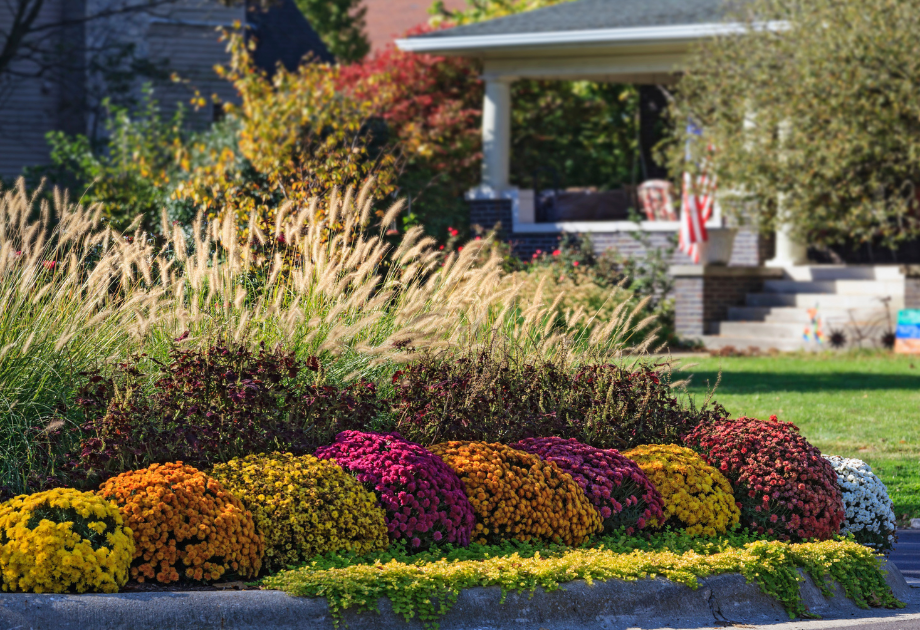
Fall Mums for October Flowers in the Bed This Week
Start with the mums already sitting on your porch. Fall mums are the classic October buy because they come home in full bloom. Set one in the front bed and that bed has color again the same afternoon. They're also one of the easiest fall flowers for outdoors we know of. A mum in bloom needs full sun, regular water, and not much else.
Garden mums are fall blooming perennials, so a mum in the ground has a chance at coming back next year. But that chance gets smaller as the month goes on. The later a mum goes in, the less time its roots have to anchor before the ground freezes.
So give yours the best odds you can: plant the porch mums in the ground now, while they're still in bloom. They'll keep flowering in the bed. And every extra day there gives the roots more time before the freeze. Keep watering after the flowers fade, too; the roots are still alive, and they need that water until a few hard freezes come through.
Once winter arrives, leave the dead stems standing until spring. Then spread two to four inches of mulch over the crown. Both give the plant extra protection through our winters.
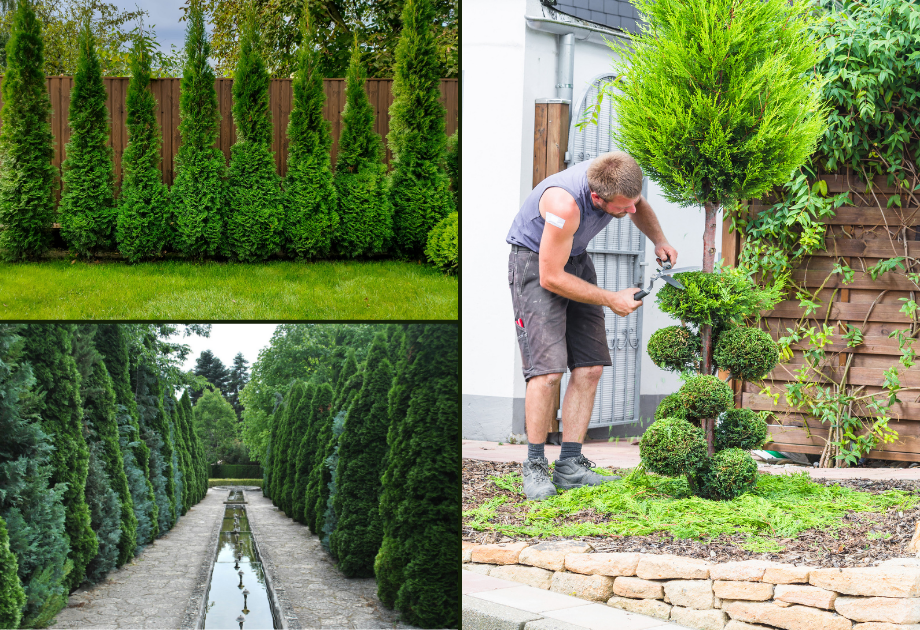
Arborvitae for Green When the Trees Go Bare
By November, the maples and oaks overhead are bare. An arborvitae holds its green through all of it. The foliage is dense and evergreen, which is why you see it in so many privacy screens, hedges, and foundation beds. Birds use that same dense cover for shelter through the cold months, too.
Planting arborvitae in fall gives it a head start. The air is cool enough to go easy on the foliage. Meanwhile, the soil is still warm enough for the roots to grow.
Arborvitae takes full sun to partial shade. If you want a dense privacy screen, though, go with the sunnier spot. Spacing depends on how wide your arborvitae gets at maturity, and that varies a lot from one type to the next. So check the plant tag, or ask our staff what the one you're holding will grow into.
The one job you can't skip: keep watering it until the ground freezes. Here's why. In winter, sun and wind pull moisture out of the foliage. Frozen ground keeps the roots from replacing it. That's what turns an arborvitae brown by February, and regular fall watering is what helps prevent it. (Save any pruning for spring, too.)
.png)
Garlic You Plant in October and Harvest Next July
With garlic, you're playing the long game. It's one of the few vegetables to plant in October, and it stays in the ground until the following July. Sure, that's nine months of waiting. But it's nine months of waiting for a crop you'll get to cook with all of next year.
Garlic wants full sun and soil that drains well. To plant it, break a head into individual cloves. Set them two inches deep and four to five inches apart, pointed-end up and flat root plate down. (A clove planted sideways still grows, but the head comes out small and misshapen.) Water the bed in, then cover the row with three to four inches of clean straw. Make sure to use straw, not hay. Hay carries weed seed, and you'd spend all spring pulling weeds out of the garlic row.
Garlic needs a stretch of cold to divide its bulbs into cloves. If you plant in spring, it comes up as one small, round bulb. But a clove that sits through a Zone 6 winter becomes a bulb that splits into a full head of separate cloves. That cold is why October is when to plant garlic here.
The garlic we carry is hardneck, which gives you four to eight cloves per head. They come out big and peel without a fight. Stored in a cool, dry spot, the heads keep for roughly four to six months.
Hardneck also sends up a scape, the flower stalk that curls out of the plant's center, in late spring. Left standing, that stalk pulls energy away from the bulb. Cut it off as soon as you see one; the head comes out bigger in July for it. And you can cook the scape just like a green onion, which gives you a little bonus harvest in June ahead of the main bulb event.
Come See All Four at Knollwood Garden Center
That's what to plant in October around here. One afternoon in the yard gets you color this week and green all winter. After that come peony blooms in late spring, garlic scapes in June, and a full garlic harvest in July.
Mums, arborvitae, and garlic are all in stock right now. Come tell our staff about the spot you have in mind. They'll point you toward the variety that suits it, and tell you what's doing well in their own yards. We're gardeners, just like you.
Stop by Knollwood Garden Center and get all four in the ground this month. See you this weekend!