
How to Choose (and Keep) the Perfect Fresh Christmas Tree
How to Choose (and Keep) the Perfect Fresh Christmas Tree
.png)
"Deck the halls with trees so green! Fa-la-la-la..." Wait. We're not here to sing; we're here to tell you what you need to know to pick (and keep) the perfect fresh Christmas tree. Right. Before we get swept away in more Christmas cheer, we'll set a scene...
You've wrapped up the Thanksgiving leftovers and it's finally tree weekend. You've got your gloves, your tape measure, and plenty of rope for securing your haul. Your family is beside you, with roughly nine opinions about what you're looking for. And somewhere in these rows is the tree you'll be relying on to keep your season merry and bright.
The tree that will keep your family's Spirit of Christmas Present alive and well has two jobs. It has to look incredible, and it has to keep on looking incredible through the beginning of January. But it can be hard to tell which tree will do those jobs when you're surrounded by a forest that looks roughly the same from one tree to the next.
You know you need to make everyone happy. But how? We'll start with the basics.
Fir, Spruce, or Pine: Why We Choose the Douglas Fir
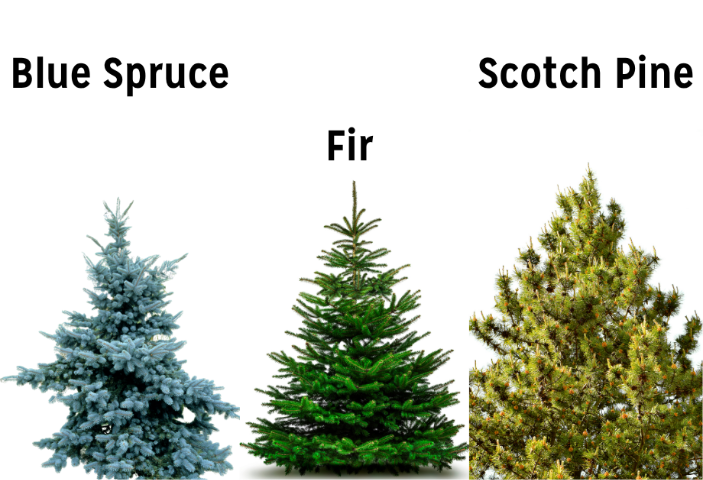
O Christmas tree, O Christmas tree, how lovely are thy branches. The carol never does say which kind of tree, which is the first thing your family has to settle on.
There are plenty of different kinds of Christmas trees out there. Balsam and Fraser fir, Scotch pine, white pine, Colorado blue spruce. They all have their fans, and we're not here to talk anybody out of a favorite. But Knollwood's choice is hands down the Douglas fir, and once you've had one in the house, you'll know why.
Start with the needles. They're soft. Flat, blue-green, and nothing like the kind that make you think twice about reaching into the branches. In a house with little ones, or a cat who's decided the tree skirt is hers now, nobody's getting poked. Those needles stay put, too.
Then there's the ornaments. The heavy glass, the hand-me-downs, that lopsided clay star from second grade. Douglas fir branches hold them without sagging.
And the scent? Sweet, a little citrusy, and strong enough to have the whole house smelling like the holidays by dinnertime.
Only one species gives you everything you're looking for, which is why the Douglas fir is the only tree you'll find on our lot.
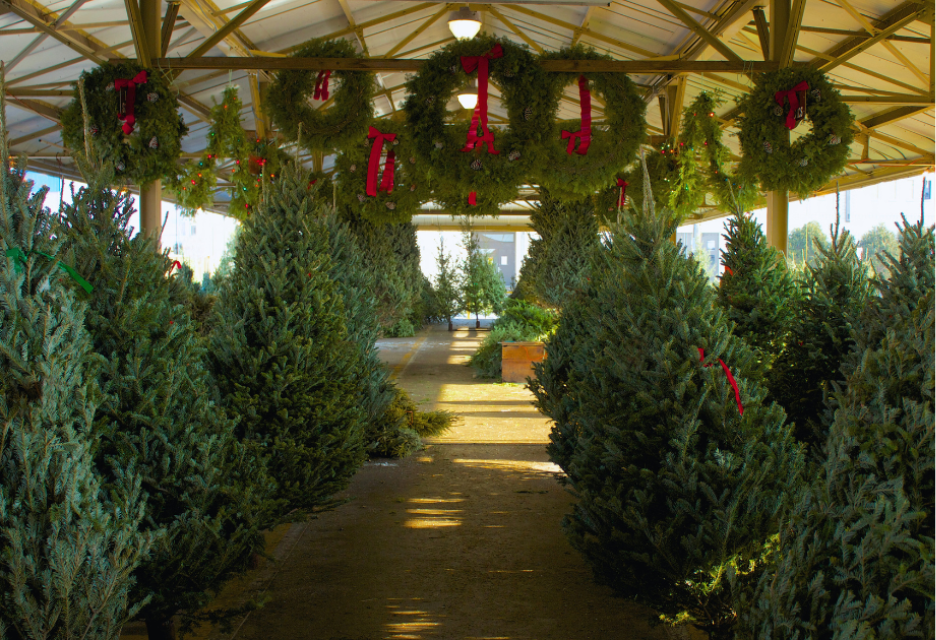
How to Spot a Fresh Tree on the Lot
You'd better watch out. Not for Santa, in this instance, but for the tree that's been leaning in a storage yard since the first week of November. How fresh your tree is the day you buy it decides everything after. A tree cut close to harvest is at its best. One that started drying before you ever laid eyes on it can't be brought back, no matter how faithfully you water it at home.
So check it yourself, right there in the row. Close your hand loosely around a branch and glide your hand down the branch toward you, letting the needles run through your fingers. Fresh ones bend instead of snapping and they stay put when you tug.
Then lift the tree a few inches and drop it back down on its base. A few brown needles from deep inside are perfectly normal, since every evergreen sheds its oldest ones. But if green needles come off the outside, that's your warning. Give the outer twigs a look too: wrinkled bark there means the tree has already dried out.
The First Thing to Do When You Get Your Tree Home
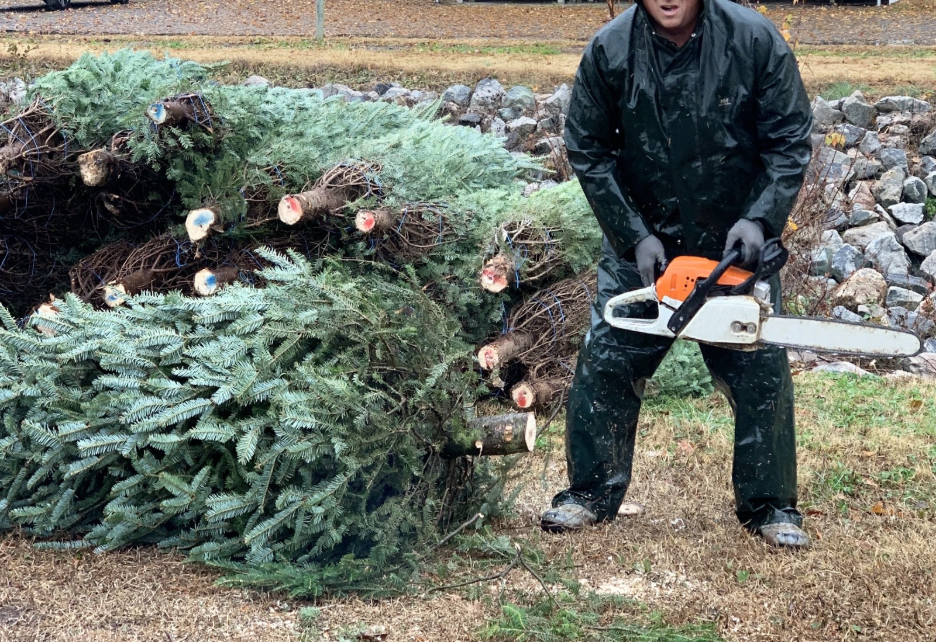
There's no place like home for the holidays. You've found the one. And now it's time to bring it home. Here's the step to take before it ever goes up on the roof of the car: ask whoever's selling it to take a fresh slice off the bottom. Half an inch does it, straight across rather than angled.
Why? It comes down to how a cut tree drinks. Once a tree comes down, the exposed end starts drying out. Within a few hours, it stops pulling water well, and after that, a stand brimming with water won't help. A fresh slice opens the base back up... Which is why the clock starts the second you pull out of the lot.
This means water comes before ornaments. Get your Christmas tree into a stand full of water the same day it comes home. The lights and the annual tangle of extension cords can wait until tomorrow. That one step is what keeps it drinking straight through the season.
Watering and Placing Your Tree for the Long Haul
The tree's up now, the lights are on, and it's all silent nights and sugarplums from here. Almost. Keeping a Christmas tree alive indoors comes down to two things: how you water it, and where you put it. Both trace back to moisture, which is the single biggest factor in how well a cut tree holds its needles.

How much water, and how often
Your tree is thirsty. Thirstier than you'd think, and thirstiest of all during that first week indoors. Figure up to a quart a day for every inch of trunk diameter. A four-inch trunk? That's a gallon between one morning and the next, so your stand needs to hold at least that much.
Check the water every day. Crawling under the branches in your slippers becomes part of the morning, right alongside the coffee. If the level drops below the cut base, the end dries and seals over, and the tree stops drinking until it gets another fresh cut. One catch: there can still be water in the bowl when the level has dropped below the bottom of the trunk. Check that the cut end is covered, not just that the bowl isn't empty.
And what goes in it? Plain tap water. That's the whole recipe.
You might have heard someone say that adding something to the water will help. Mostly, it won't. In some cases, it can actually cost you needles. So if you're considering sugar, aspirin, bleach, soda, or a commercial preservative: don't. You'd be better off saving the 7UP for the party.
Where to put your tree
Chestnuts roasting on an open fire, a tree glowing right beside it. Lovely song. Rough plan for the tree.
Fireplaces, radiators, heat vents, and direct sun pull water out of an evergreen faster than anything else in the house. A warm, dry living room is what finds out how fresh that tree really was. Move it a few feet into a cooler corner and the drying slows. Your tree will empty the stand more slowly, too.
You may still want it in the front window where the whole street can see it. Fair trade, as long as you make it knowingly and keep a closer eye on the stand.
Come Pick Your Tree at Knollwood Garden Center
Back to those rows, then, and the nine opinions, and the tree that has to keep your season merry and bright. You know what the needles should do in your hand now. You know why that first drink of water is the one that counts, and why the warmest corner of the room isn't the kindest one. You'll know when the season's over, too. A fresh tree lasts until the needles turn brittle and start coming off on your sleeve. By then the ornaments are usually headed back into their boxes anyway.
And remember the tree that had been leaning in a storage yard since the first week of November? A tree that was cut close to harvest has more good weeks in it, and that's the one part of all this you can't do anything about once you're home. It's decided before you ever pull into the driveway.
So come find yours with us the weekend after Thanksgiving. Walk the rows, run a branch through your hand, and take home the Douglas fir that fits your room. Our staff will be right out there with you, glad to help you find the right height and hold the twine while you load. Stop by this weekend!